Dadaism, Surrealism, Art as a Force for Change, and Movements without Borders
Get link
Facebook
X
Pinterest
Email
Other Apps
Dadaism emerged in 1916, with the action of forming a collective of artists making art against art or anti-art as a method to protest war, nationalism, and conformity. Hugo Ball and Emmy Hennings founded the bar Cabaret Voltaire and held nightly performances and readings of manifestos. By practicing anti-art through techniques of nonsense, chance, and ridicule, they worked agains borgeouis and aristocratic aesthetics. Why would the forms of poetry, collage, montage and found object assemblage be likely choices for a nonsensical form? Tristan Tzara's 1918 "Dada Manifesto"
"
The [Karawane] WHY:
Interpreting something which appears close to be meaningless is cultural terrorism in a world where everything should serve the established purpose. DaDa was cultural terrorism, DaDa is therefore for our times, when the ‘integrated’ presence of the middle-class + BAME + LGBTQ+ arts establishment threatens cultural terrorism at its core, not the other way around. As act Karawane defies and defiles the expectations of any statement ever made and as vigorously undermines itself, at the same time."
"The exquisite corpse will drink the young wine"
Adjective, Noun, Verb, Adjective, Noun.
A broken calendar oscillates like sunny tin.
Surrealism a movement that emerged in Europe in the period following WWI, responding both to the horrors of war, as Dadaism did, as well as to increasing awareness of the research by Sigmund Freud into the unconscious mind. Surreasists aimed to create opportunities for the unconscious mind to take the lead and become audible, visible, tangible, their efforts often resulting in abstract, illogical, and later often dreamlike scenes. Defined by André Breton, Surrealism is "pure, psychic automatism." Surrealists, Bréton wrote, sought to: "resolve the previously contradictory conditions of dream and reality into an absolute reality, a super-reality", or surreality
Angie Speaks episode on Surrealism and Dadaism as a force that changes society and the way we think without necessarily becoming propaganda. I share because she offers such a clear articulation of the cultural and political backdrop to Dadaism.
Max Ernst The Hat Makes the Man (C'est le chapeau qui fait l'homme) 1920
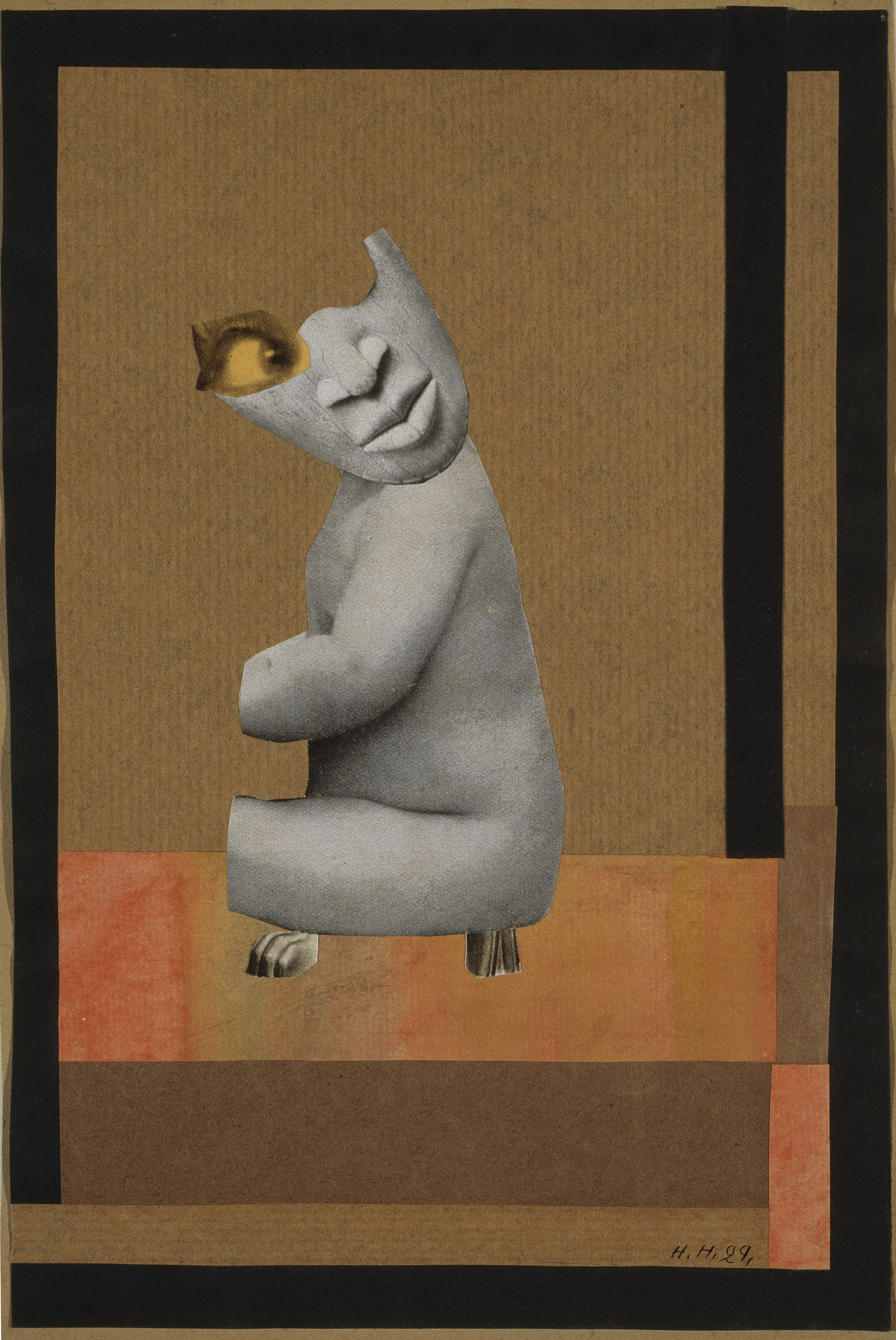
Hanna Hoch, From an Ethnographic Museum, 1924-1930
Max Ernst, Oedipus Rex, 1924 oil on canvas
Eric Satie(composesr), Jean Cocteau(visionary), Pablo Picasso(set and costumes), Leonide Massine(choreography), Sergei Diaghilev (director, Ballet Russe) Parade, 1917




Comments
Post a Comment